
Solutions
Industries
Resources
About
Most festivals charge food vendors a flat fee, a percentage commission on gross sales, or a hybrid that takes whichever is greater. The simplest way to collect it is to run every vendor sale through one event platform. The festival sees each vendor's sales as they happen, and settlement calculates commission, taxes and fees automatically.
Read time:
8
minutes

Food vendor agreements usually follow one of three models. The model you choose decides what the festival needs to know at the end of the event: a flat fee needs only a payment, while a percentage needs every vendor's gross sales.
Percentage and hybrid models tie the festival's income to each vendor's sales. The fee is only as accurate as the gross sales behind it, so how you collect those numbers matters as much as the rate you set.
When each vendor runs its own payment system, the festival collects after the sales happen. The published fair and festival documents we reviewed show a common pattern.

Register tapes, Z reports or POS reports for every selling day, as the 2026 Tri-County Fair food vendor application requires.

A minimum guarantee or deposit, credited against the commission at the end.

Some agreements reserve the event's right to examine each vendor's sales records.

Commission is paid once totals are in. One 2026 California fair concessions RFP takes payments during the run and the final payment after the fair ends.
Sources: Tri-County Fair 2026 food vendor application; 21st District Agricultural Association RFP 26-02.
For festival operators, that often means reconciling self-reported totals and chasing payments in the days after the gates close.
| Vendor-reported sales | One event platform | |
|---|---|---|
 Payments | Each vendor processes on its own system | Every sale runs through the festival's platform |
 Visibility | Totals arrive after each day or after the event | Sales by vendor, stand and hour as they happen |
 Commission | Calculated by hand from reported totals | Applied automatically from each vendor's terms |
| Funds | Vendors hold the revenue and pay the festival | The festival holds the revenue and pays each vendor its share |
| Records | Tapes, spreadsheets and email | Sales, transactions and settlements in one place |
Centralized processing reverses the direction of payment. The festival processes every transaction, so revenue lands with the organizer and each vendor receives its share at settlement. Vendors still run their own stands and menus.
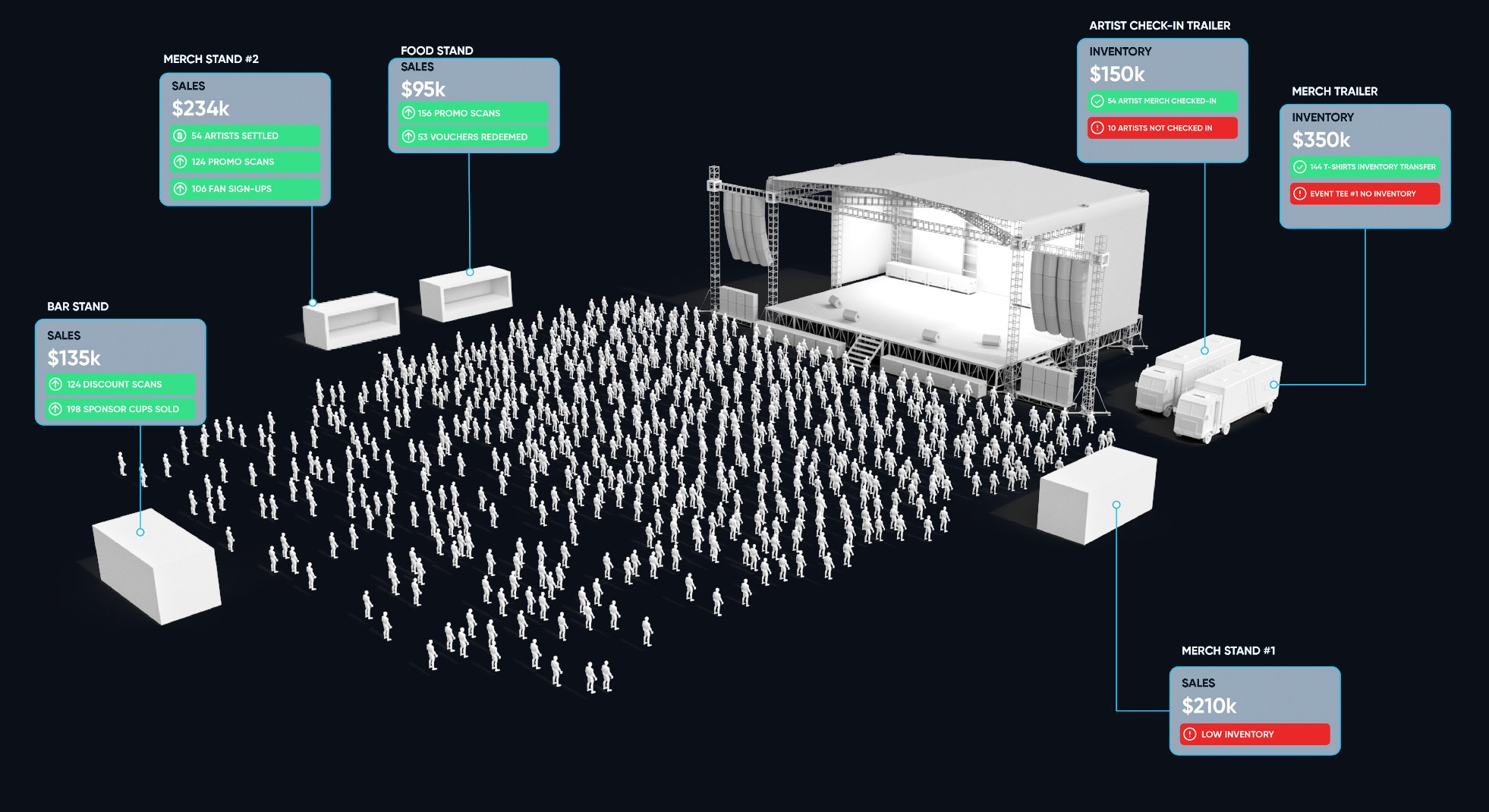
With atVenu food and beverage, each vendor gets its own login and stands, while the festival sees total revenue across every vendor.

Each vendor sells its own menu on its own stands; the festival sees the whole event.

Use your team's existing tablets, iPads and phones, or have gear shipped prepped and ready. Payments run through atVenu's own card readers.

Offline mode keeps taking cash, cards, tap to pay, RFID wristbands, vouchers and discounts.

Food vendors, bars, merchandise and artist sales share one set of reports.
A settlement is the record of what each vendor sold, what it owes and what it is paid. Each vendor's terms can differ, which is why one consistent format matters. A complete settlement covers:
Separate rates for alcohol, non-alcohol, food and other sales, set for each vendor.
The tax rate, whether prices include tax, and who retains it: the festival or the vendor.

Set costs such as water, ice, tents, power, kitchen equipment and health permits, with per-vendor overrides.
Deposits already paid, cash collected at the stand and card processing fees.
Gross, tax, tips and net sales by day and payment type, then the final payment and who settled it.
The math is the same either way. What changes is who holds the money and how much of the work is manual. atVenu's Food Vendor Settlements imports each vendor's sales automatically, applies the show costs, taxes and commission you set once, lets you adjust any single vendor, and sends the vendor a PDF copy when the settlement is complete. For a line-by-line glossary, see how to settle with your vendors.
Most of the work moves to before the event, when your team has time. After the event, settlement becomes a review.
Enter each vendor's commission by category, show costs, tax handling and deposit once, before the event.

Use the menu details you already collect with vendor applications to set up items, prices and stands.
Give each vendor its devices at on-site check-in. Staff log in to their stand and start selling.
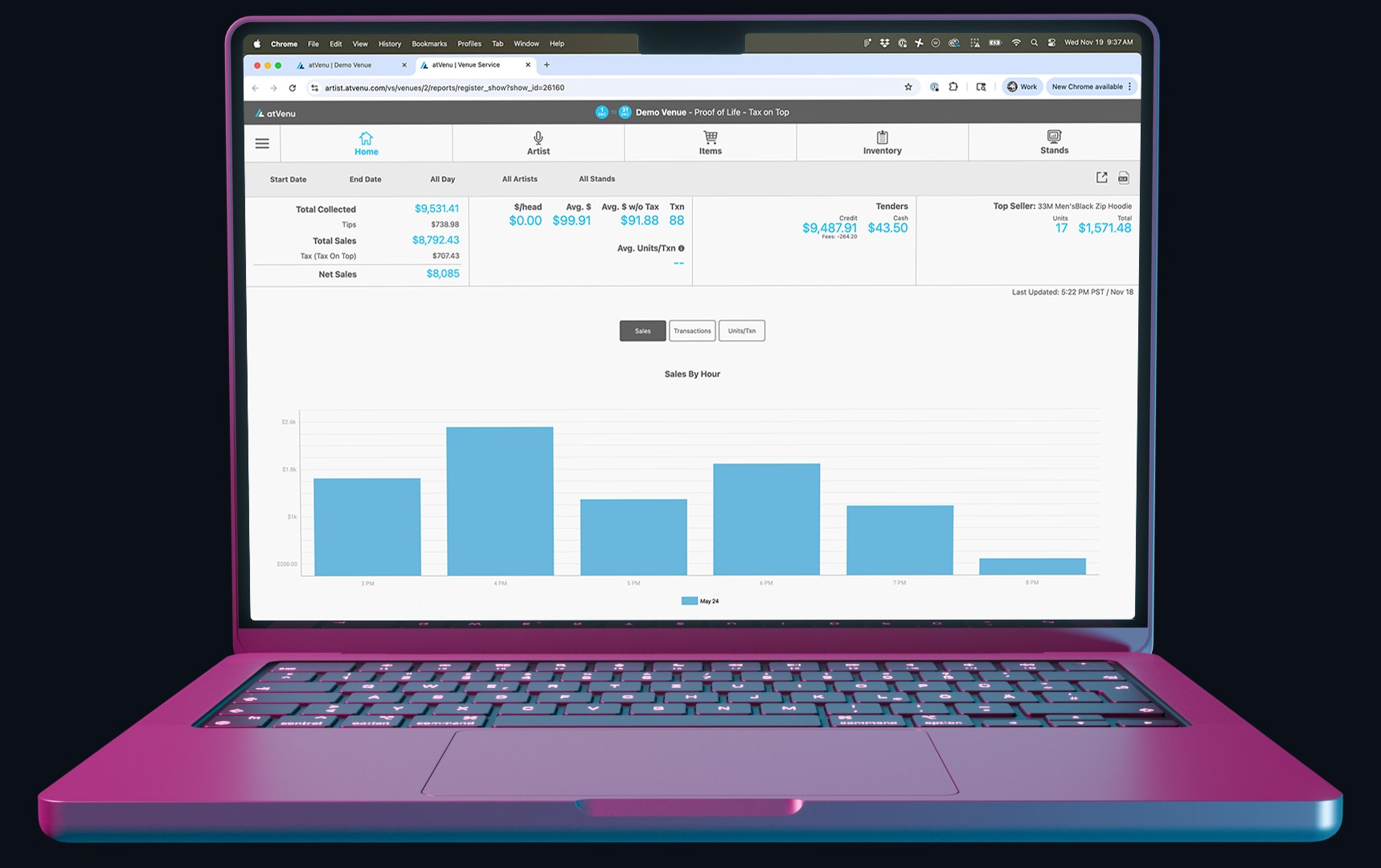
Track sales by vendor, stand and hour while the festival runs, online or offline.
Sales flow into each vendor's settlement; add cash adjustments and any one-off costs.
Complete the settlement, send the vendor its copy, and pay its share on your agreed schedule.
Centralized sales are easier to settle, and they also show what is selling, where and when, while there is still time to act. You can compare vendors, spot the peak hour at each stand and plan next year's layout from real numbers.
Shared checkout also lets sponsors fund offers at any food stand and measure them. In festival promotions run through atVenu, fans given a reusable $5 food and beverage discount showed what that can do:
Cashless wristbands add to the picture. In atVenu wristband data, 95% of RFID wristband wearers use the wristband for all of their payments, and wristband users spend 14% more per day.
Use these questions with any payment or event commerce provider before your next festival.
Who processes the payments: the festival or each vendor?
Can commission differ by vendor and by category, such as food and alcohol?
Do show costs, deposits and tax rules apply automatically, with overrides?
Does every payment type work offline, including wristbands and vouchers?

Can we use devices we own, and is gear available for event days only?
Does each vendor receive its settlement, and can finance export the records?
atVenu works with 565+ festivals and powers 150,000+ events each year. Festivals that have announced food and beverage operations on atVenu include the Tacos and Tequila Festival, Vegandale and the Hudson River Festival. See more on the atVenu festivals page.
It varies by event and menu. In the 2024 to 2026 fair and festival vendor documents cited in this guide, percentage terms run from 15% to 27% of gross sales, and many events pair the percentage with a minimum fee or a deposit.
The vendor pays either the minimum fee or the percentage of sales, whichever is larger. On terms of $800 or 20%, a vendor that sells $3,000 pays $800, and a vendor that sells $6,000 pays $1,200.
Your vendor agreement decides. The settlement should record the tax rate, whether prices include tax and who retains it, and show card processing fees as their own line, so the festival and the vendor see exactly what each paid.
Only if your agreement asks for it. Several of the published fair and festival documents we reviewed already require a register and daily sales reports. With one event platform, vendors keep their own menus and stands, while the festival provides the system and processes every sale.
atVenu Register keeps selling in offline mode, including cash, cards, tap to pay, RFID wristbands, vouchers and discounts, and syncs the sales once a connection returns.
Yes. Use the tablets, iPads and phones you already have; card payments run through atVenu's card readers, so card readers from other payment providers are not used.
Published:
November 5, 2026