
Solutions
Industries
Resources
About
When a stadium becomes a concert venue for one night, everything changes.Operations that normally run smoothly for a sporting event suddenly need to scale to touring demand. Merchandise teams must move inventory across dozens of locations. Lines surge in waves. Fans arrive all at once. And there is only one opportunity to get it right.
Read time:
5
minutes

When a stadium becomes a concert venue for one night, everything changes.
Operations that normally run smoothly for a sporting event suddenly need to scale to touring demand. Merchandise teams must move inventory across dozens of locations. Lines surge in waves. Fans arrive all at once. And there is only one opportunity to get it right.
That was the reality when Zach Bryan performed at Michigan Stadium in September 2025 — a show that drew 112,408 fans, the largest ticketed concert attendance in U.S. history.
The demand didn’t just break attendance records.
It produced approximately $5 million in merchandise sales in a single night, another historic milestone for the industry.
But record-breaking merch revenue does not happen because one merch stand sells fast.
It happens because the entire stadium operates as a connected system.
And on nights like this, the difference between chaos and success is operational visibility.
When touring artists bring stadium shows to venues that normally host sports, the operational model changes overnight.
Instead of predictable game-day patterns, teams must prepare for:
Every one of those moments represents revenue.
But every minute a fan spends waiting in line is also time they are missing the event they came to experience.
That tension — speed vs. scale — defines stadium merchandise operations.
From the outside, merchandise sales at a concert can look simple.
Put up some stands. Sell shirts. Ring transactions.
But stadium-level tours introduce complexity most venues do not face on a normal game day.
For a show like this, merchandise teams may manage:
If those systems are disconnected, problems happen fast.
Fans reach the front of a line only to hear the item they want is sold out — even though inventory may still exist in another trailer or stand.
Inventory sits idle in the wrong location.
Lines get longer.
And revenue walks away.
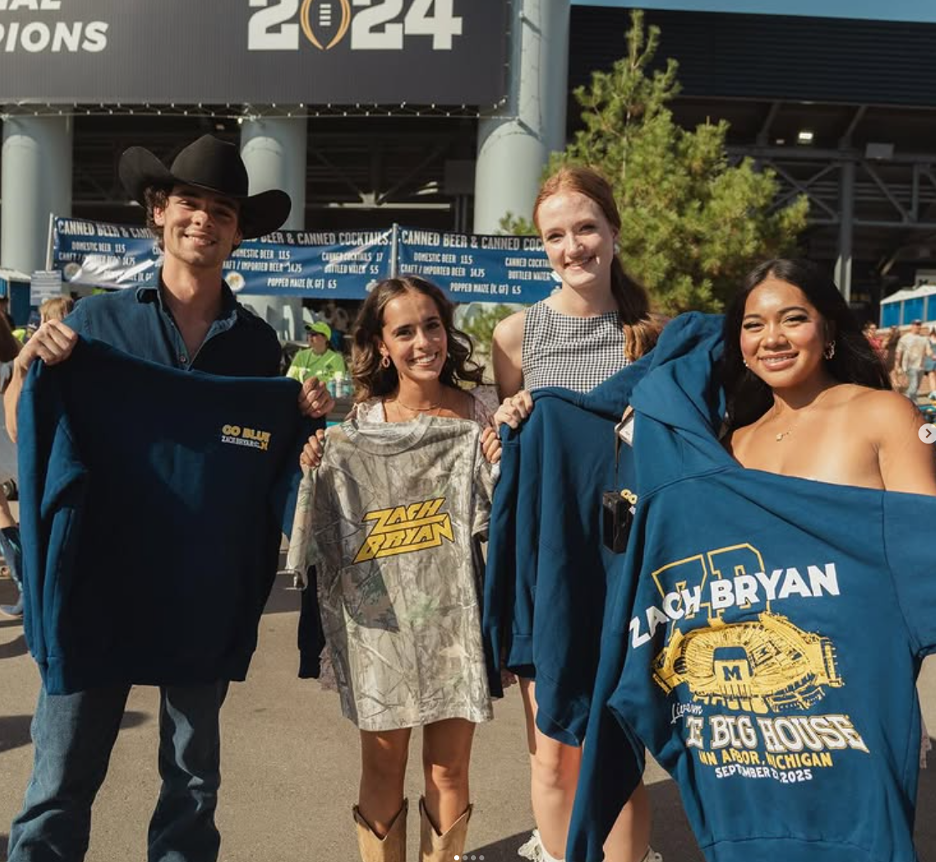
The biggest merch nights are not won by selling one more t-shirt.
They are won by removing friction.
The teams that succeed treat merchandise like a revenue system — not just a retail operation.
At Michigan Stadium, merchandise operations were executed by Happy Belly Vending, with atVenu powering point of sale and inventory visibility across the entire event footprint.
That combination allowed the team to operate the entire stadium as one connected ecosystem.
With real-time reporting and location-level inventory visibility, operators could:
Instead of reacting after something sold out, teams could adjust during the event.
That operational awareness is what allows record demand to convert into record revenue.
At concerts — especially stadium shows — fans are buying during emotional moments.
They want a souvenir from the night.
They want the shirt everyone is wearing.
They want something that marks the memory.
But those buying decisions are fragile.
If the line is too long, the fan walks away.
If the item is unavailable, the moment passes.
If checkout is slow, they choose the show over the purchase.
The faster the buying moment feels, the higher conversion climbs.
That is why modern event commerce platforms focus on:
When buying becomes frictionless, fans buy more — and more fans buy.
The Michigan Stadium show also highlighted a broader industry shift.
College and professional sports venues are increasingly hosting major concerts to unlock new revenue streams.
Large football stadiums can hold more than 100,000 fans, making them some of the largest event spaces in the world.
For venue operators, that scale represents a massive opportunity — but also a massive operational challenge.
Concerts often operate very differently than sports:
Venues that treat these events like a normal game day miss the revenue opportunity.
The venues capturing the most value adapt their operations to touring demand.
The success of nights like this reveals something important about the future of live events.
Fans are still buying.
In fact, they are often buying more than ever.
But they only buy when the experience makes it easy.
That means:
Merchandise, food, beverage, and premium experiences are all part of the same ecosystem.
And when those systems are connected, operators gain the visibility they need to continuously improve.

Events like this prove what modern event commerce should look like.
A stadium filled with more than 110,000 fans.
Millions in merchandise demand.
Dozens of selling locations operating simultaneously.
And one night to capture every opportunity.
That is exactly what atVenu is built for.
From merchandise trailers outside the stadium to premium suites inside it, atVenu connects point of sale, inventory visibility, and real-time reporting so event teams can operate at touring scale.
Because when demand peaks, every minute matters.
And when fans are ready to buy, the system behind the scenes has to be ready too.
You only get one night.
Make it count.
Published:
January 7, 2026