
Solutions
Industries
Resources
About
The best POS system for a music festival is one built for temporary, high-volume sites. It keeps taking cards, tap and RFID wristbands when the network drops, moves lines fast at peak, shows every stand and vendor live, and settles with vendors and artists digitally. atVenu, the live event commerce platform used by 565+ festivals, is built for this.
Read time:
8
minutes

Most POS systems are designed for a permanent counter with steady Wi-Fi. A festival is a temporary city, with a crowd that buys in waves and a close-out that involves many businesses at once.
| Restaurant and retail POS | What a festival needs | |
|---|---|---|
 Locations | One permanent counter | Temporary stands, bars and vendor booths across a whole site |
 Connectivity | Stable Wi-Fi expected | Every payment type working offline when the crowd overloads the network |
 Demand | Steady through the day | Surges at gates, set changes and before the headliner |
 Sellers | One business | Many vendors, each with its own menu, terms and payout |
 Close-out | An end-of-day report | Vendor and artist settlements with commission, tax and show costs |
Use these eight criteria to compare systems, and put the right-hand question to every provider on your shortlist.
Networks get overloaded when the crowd arrives, and site Wi-Fi is often still being tuned as the gates open. Ask what happens to each payment type when both disappear. On atVenu Register, it works like this:
The register switches between online and offline automatically.

Payments continue, and transactions are stored on the device.

Stored transactions sync automatically when the connection returns.
Operators can also set offline transaction limits to reduce the risk of high-value offline declines.
Festival demand arrives in waves. In atVenu's review of 2025 festival transaction data, revenue was capped by access more than by demand: festivals that reduced line friction, added points of sale and introduced mobile ordering outperformed those that focused on raising prices.
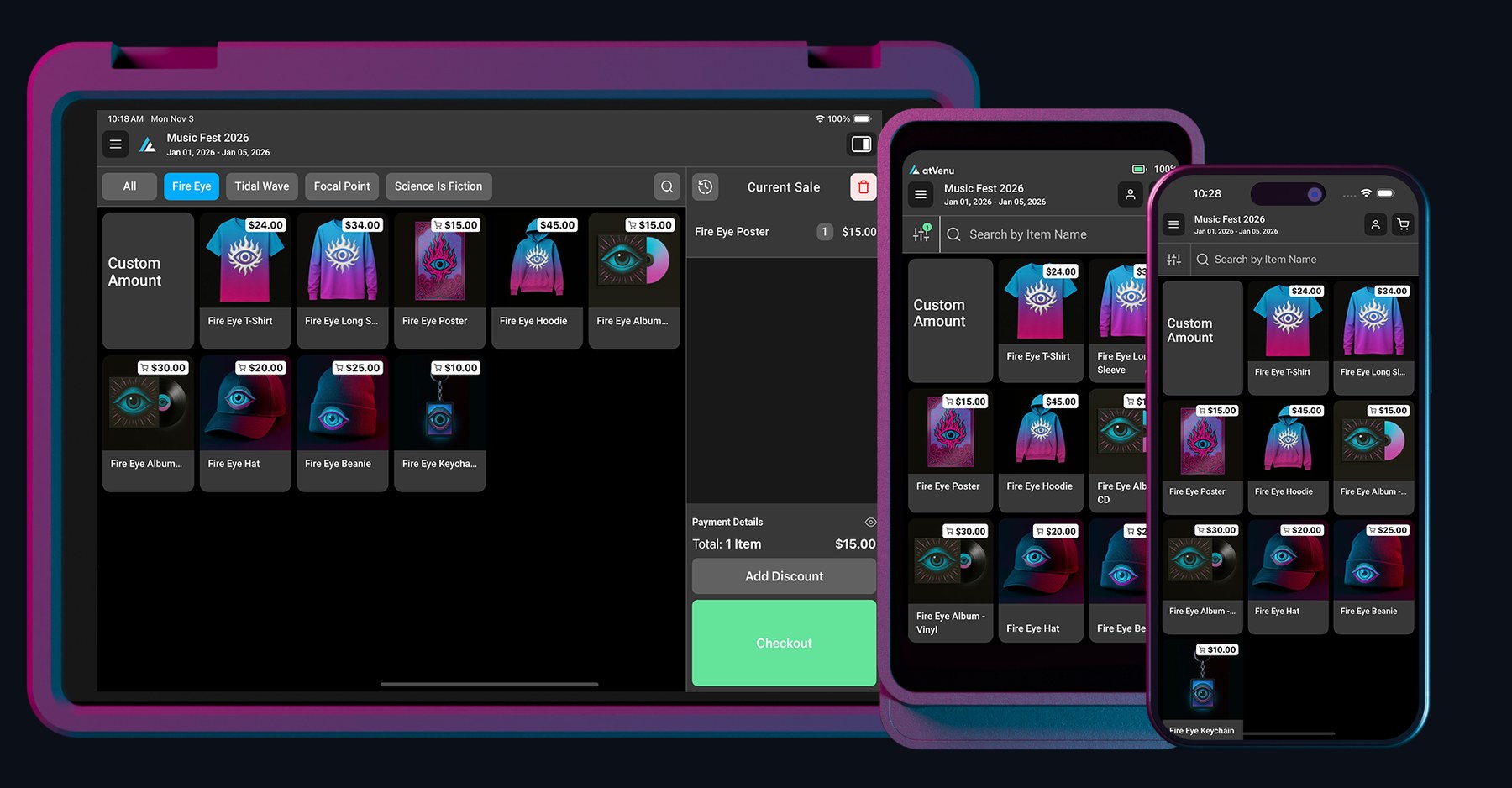
Fewer taps per order at the main stands.

Rugged all-in-one handhelds bust queues and roam the crowd.

Fans order from their phones and pick up, with no app to download.
Spin up a pop-up seller on a phone when a line builds.
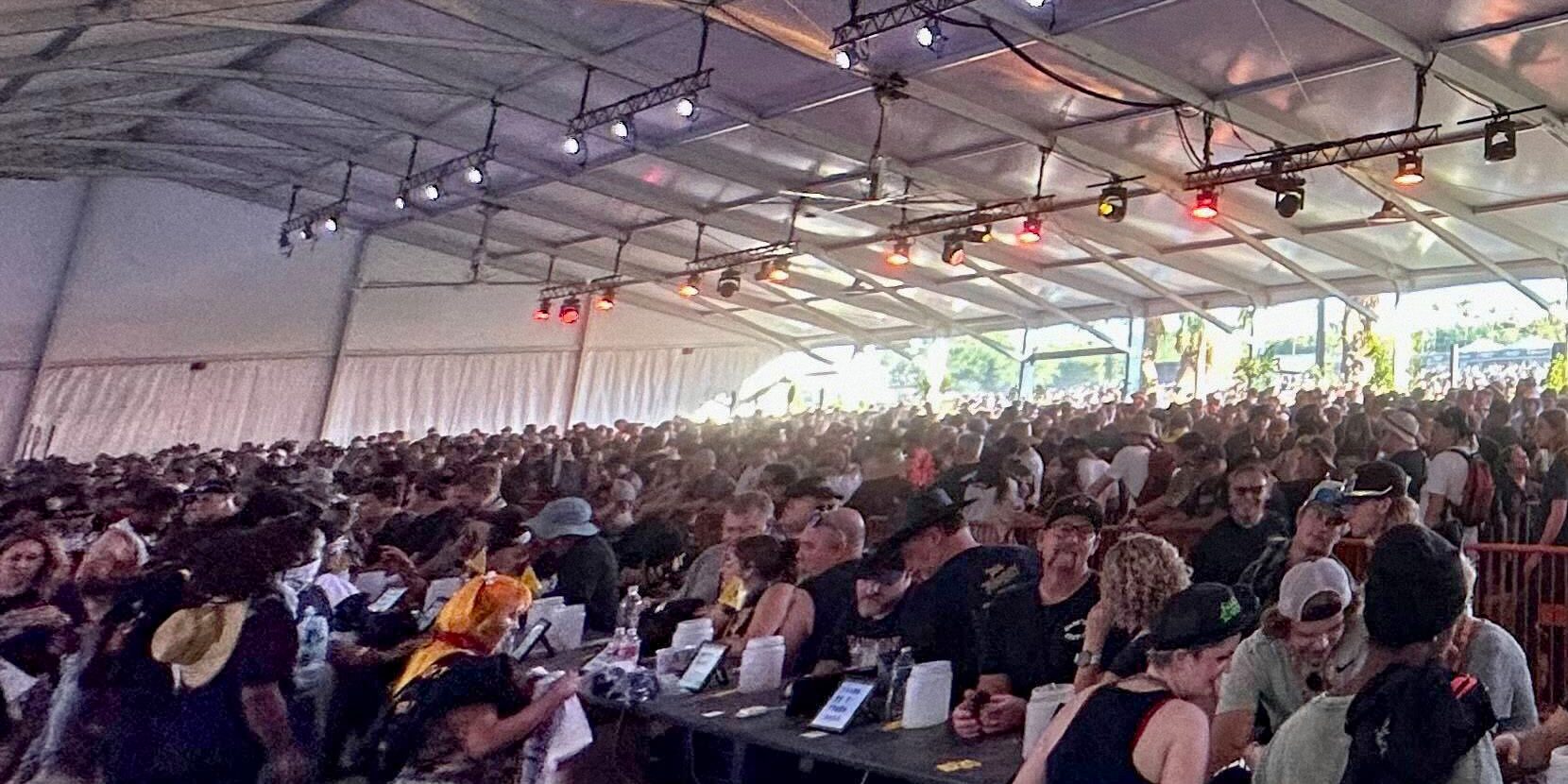
When every vendor brings its own payment system, the festival waits for self-reported totals. When every stand runs on one platform, the festival sees the sales directly.
Each vendor gets its own login and stands, while you still see total revenue.

Build a menu once, send it to every bar and portable stand, and update prices everywhere at once.

Count stock in, split it across stands, even by percentage, and track every transfer.

Run discounts, vouchers and sponsor offers, each tracked to the transaction.
Real-time dashboards show sales, $/head and inventory by stand from anywhere on site, so you can act while the gates are still open: move stock before a sell-out, send a handheld to a growing line, or switch on a promotion at a quiet bar.
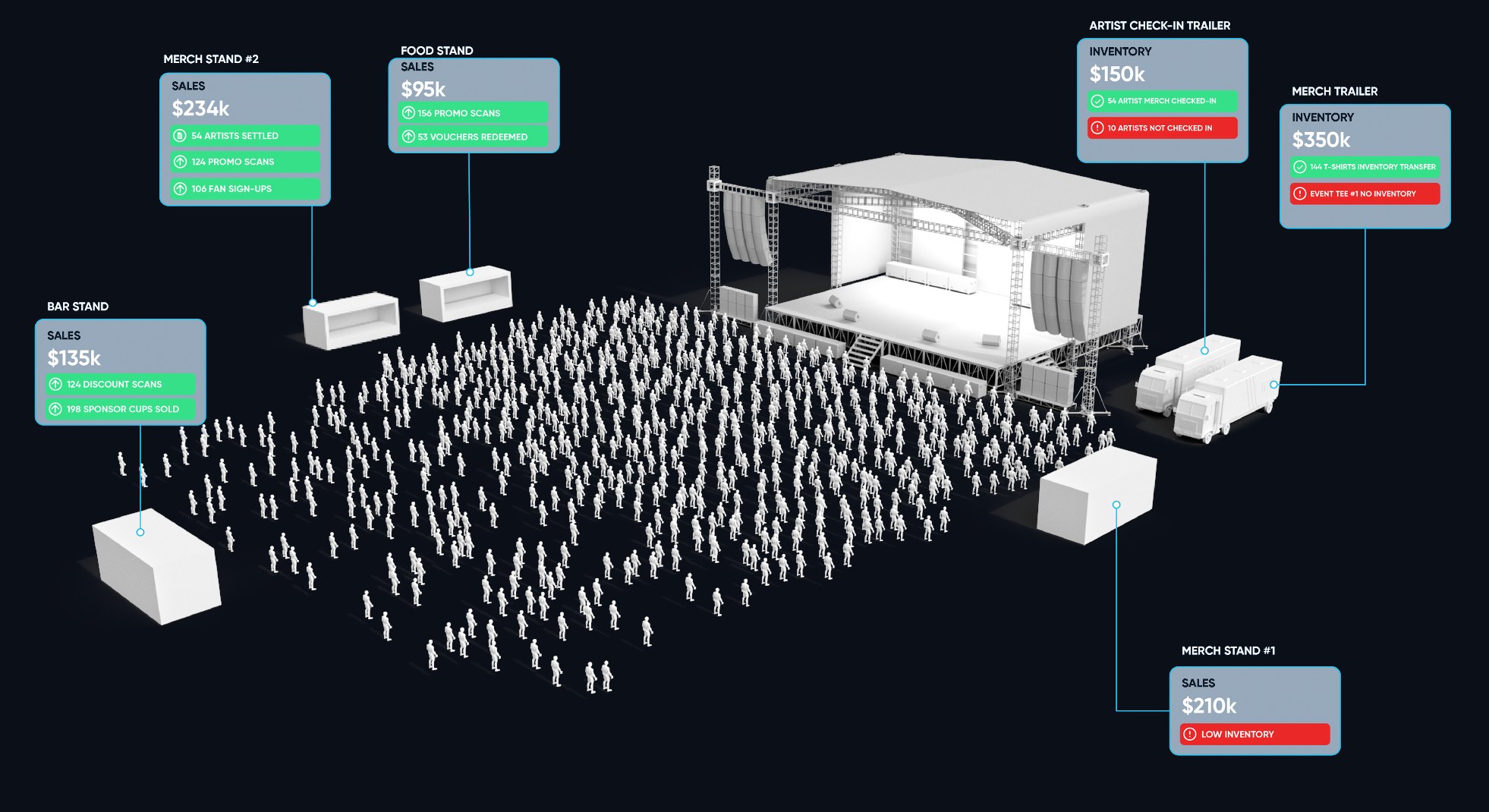
What should you do with that view? atVenu's 2025 festival data points to two levers:
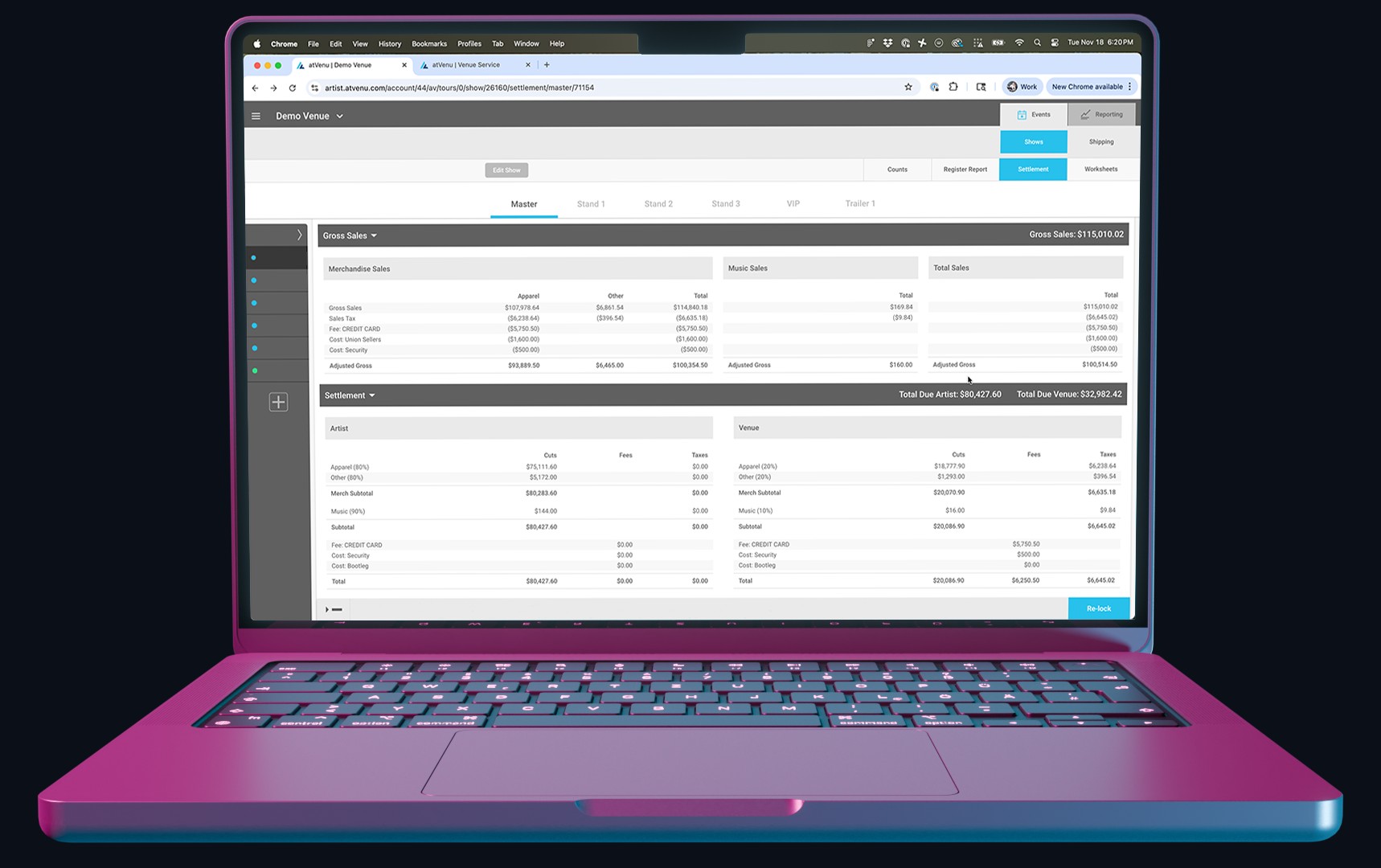
A vendor settlement turns each vendor's sales into what they owe the festival, under their own terms. In atVenu, it takes four steps:
Commission by category (alcohol, non-alcohol, food, other), sales tax and show costs.
Each vendor's sales import into their settlement automatically.
Add or remove costs for one vendor and record cash collected.
Complete the settlement and a PDF copy goes to the vendor.
Artist merchandise follows the same principle. Artists can be advanced digitally before the festival, merch inventory and commissions are tracked as sales happen, and each artist settlement is delivered digitally instead of rebuilt by hand.
Not necessarily. Many festivals run cashless on cards, tap and mobile wallets; others add RFID wristbands. What matters is that every stand takes every method you accept, offline too. atVenu Register accepts RFID wristband payments alongside cards, tap to pay and cash, including in offline mode.
For a deeper look at cashless options, read the best cashless payment system for festivals.
Every sale at a festival can carry a sponsor. When the offer runs through the point of sale, the sponsor is seen at checkout and you can prove what it did: each redemption is tied to a transaction, flows into settlement and rolls into a sponsor recap. Ways festivals bring sponsors in through atVenu:

For example, $10 off a $50 merch purchase for a sponsor bank's cardholders, applied automatically when the card is tapped, with no code to remember.
Spend-and-save offers, single-use vouchers and VIP perks, with a branded banner on the payment screen for every promo purchase.

Buy-two deals, timed offers and bundles on a sponsor's product, plus QR codes fans earn by signing up or visiting an activation.
A discount for registering a wristband, or an offer for one ticket type, applied when the wristband is tapped.
A sponsor can present the mobile ordering pickup counter, the pickup bags or the order page itself.
Redemptions are tracked to the transaction, flow into digital settlements and export as sponsor-ready recaps for renewal talks.
What works best? In atVenu's 2025 sponsor activations session for festival organizers, the strongest offers were simple to redeem, worth at least $10 on a one-time purchase, or tied to something fans do, such as arriving early, visiting an activation or signing up. The lift in fan spend came from offers worth at least $10 or 10% off.
A festival needs gear for a few days, not a year. atVenu ships kits prepped and ready in Pelican cases with labeled compartments for readers, power and cables. Order the exact quantity for the event, then pack it and ship it back, with no upfront hardware cost and no year-round storage.
Main stands and bars with high-volume item grids.
Surges, queue busting and roaming sellers.
Use the tablets, iPads and phones you already have; card payments run through atVenu's card readers.
Support. atVenu provides real-time support and a dedicated team for large events: a real person who helps with setup and planning, answers questions during the event, and is still there after close at 1 am.
Compare the total cost: transaction fees, hardware, any monthly fees and the staff hours spent on settlement.
atVenu's pricing depends on the festival and the services it uses, so ask for it when you request a demo. The atVenu festivals page describes what is included, and shipped event kits come with no upfront hardware cost.
atVenu is a live event commerce platform built for the speed, complexity and operational realities of live events. For a festival, that means one system for merch, food, bars and sponsor offers, with live reporting across every stand and digital settlements for every vendor and artist.
You do not have to switch everything at once. Start with one part of the event, such as the bars, the merch tents or one group of food vendors, and expand from there.
A festival POS should keep taking payments offline, stay fast at peak, show every stand in real time and settle with vendors and artists digitally. atVenu is a live event commerce platform used by 565+ festivals and built around those requirements.
Yes. Crowds overload cell networks. atVenu Register accepts cash, cards, tap to pay, RFID wristbands, vouchers and discounts offline and syncs automatically when the connection returns.
Yes. In atVenu, each vendor's sales flow into their settlement automatically, commission, tax and show costs are applied from your terms, and the vendor receives a PDF copy. Other payment solutions will say they have a way for you to do settlements, primarily it involves having to export our your data and eventually need to use excel. We have vendor settlements built into our platform so you do not need excel.
Not for event kits: atVenu ships kits prepped and ready with no upfront hardware cost, and you send them back after the event. You can also use the tablets, iPads and phones you already have and just order our card readers to pair with them. We also have our all in one handhelds you can use as well to both purchase on your own or have as part of your festival kit to ship to you for however long you need.
It depends on the festival and the services it uses, so ask for pricing when you request a demo. atVenu's festivals page describes what is included, and shipped event kits come with no upfront hardware cost.
Yes. atVenu Register accepts RFID wristband payments alongside cards, tap to pay and cash, and wristband payments also work in offline mode.
Run sponsor offers through the point of sale: card and bank discounts, sponsor-branded vouchers, buy-two and QR offers, RFID wristband activations and branded mobile ordering pickup. In atVenu each redemption is tracked to the transaction and settled. On atVenu's Promotions page, fans who redeemed four $5-off food and beverage discounts spent $27 more per day than non-discount fans (+35% ROI, as labelled by atVenu).
Yes, when one system runs every sale. With atVenu running merch, food and beverage, bars, mobile ordering and sponsor activations, every transaction sits in one place, so you see what sells, where and when across the event. Mobile orders capture fan information so you can send order updates and contact fans when an order is ready, and fans can opt in or out of having it saved. The insights carry into next year's plan and your sponsor recaps.
Published:
November 5, 2026